
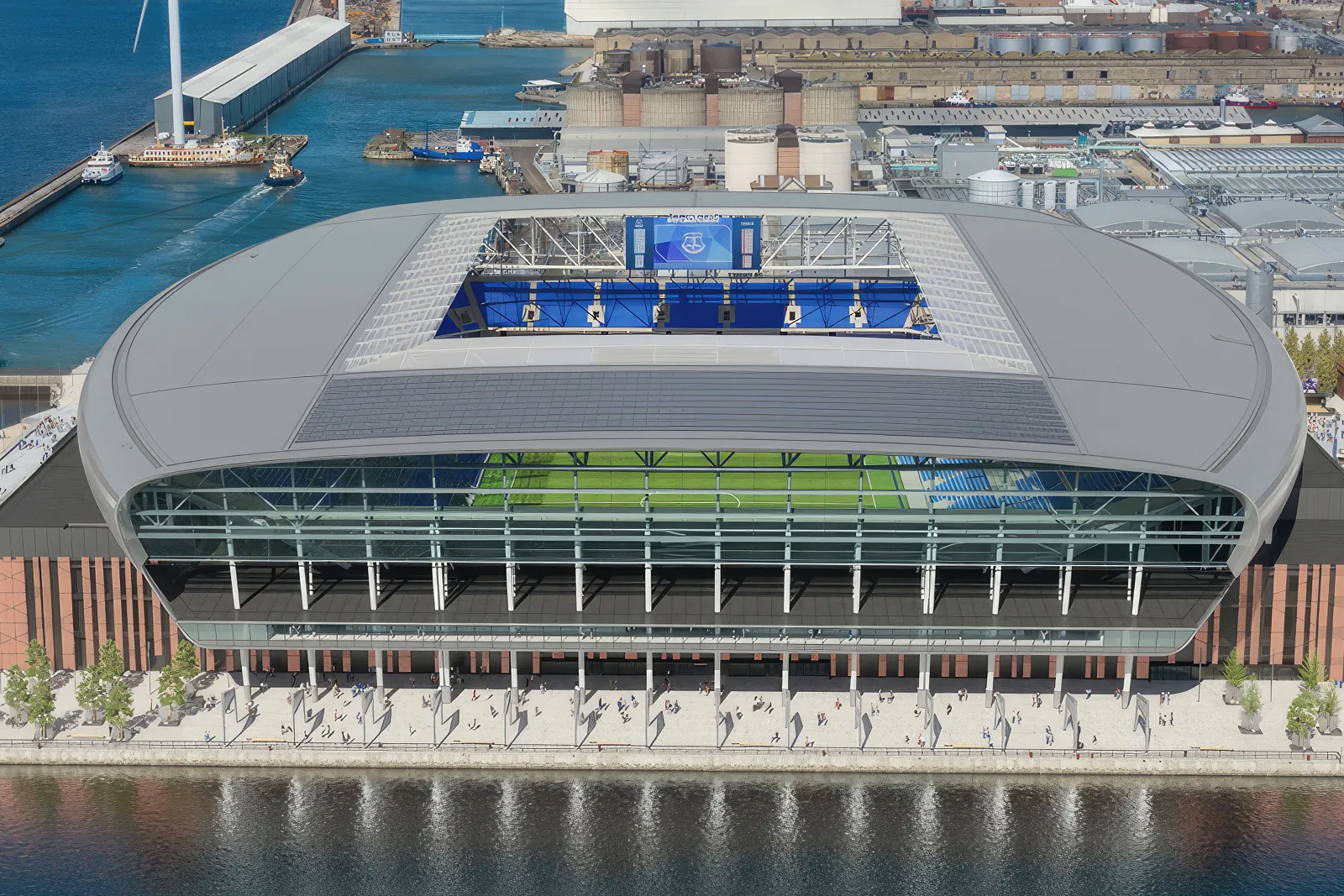
Everton’s new £500m stadium at Bramley‑Moore Dock has become one of the most powerful catalysts for Liverpool’s waterfront regeneration, unlocking large‑scale investment, accelerating economic growth, and strengthening the city’s appeal to property investors.
Liverpool’s waterfront has been undergoing a long‑term transformation, but the arrival of Everton’s 52,888‑capacity stadium has pushed momentum to a new level. The project is not just a sporting landmark, it is a regeneration anchor shaping the future of the entire North Docks corridor.
Everton Stadium: A Regeneration Engine on the Waterfront
The new stadium sits on a 5.7‑hectare site at Bramley‑Moore Dock, a once‑underused part of Liverpool’s historic maritime district. The £500m development is designed to reconnect the northern docks with the city centre, forming a continuous regeneration spine from the Liver Building to the stadium.
Its integration into the wider Liverpool Waters masterplan, a 60‑hectare, 30‑year redevelopment of the northern docks, ensures the stadium is not a standalone venue but part of a mixed‑use district of residential, commercial, cultural, and leisure assets.
This alignment has been supported by Peel Waters, Liverpool City Council, and private investors, with major infrastructure upgrades including transport links and public realm improvements.
Economic Impact: Jobs, Investment and Long‑Term Growth
The stadium is already recognised as a major economic driver for Liverpool’s North Docks. Key impacts include:
- £500m direct investment into the construction and development of the stadium.
- Significant job creation, both during construction and in long‑term operational roles.
- Increased footfall and year‑round economic activity, supported by retail, hospitality, community spaces, and a central plaza built into the wider masterplan.
- Catalysed commercial development along the mile‑long stretch between Bramley‑Moore Dock and the city centre.
For investors, this level of capital injection and infrastructure improvement typically correlates with rising demand for rental accommodation, increased business activity, and long‑term capital appreciation.
Impact on Property Prices and Investor Demand
While exact price‑uplift figures vary by scheme, regeneration‑led districts consistently outperform wider city averages. With Everton Stadium anchoring the northern waterfront, the area is experiencing:
- Growing demand for residential units from young professionals, hospitality workers, and fans seeking proximity to the stadium.
- Increased investor interest in off‑plan and completed units within Liverpool Waters and surrounding neighbourhoods.
- Strengthening rental yields, supported by new amenities, improved connectivity, and year‑round footfall.
The combination of a world‑class stadium, major public realm investment, and a long‑term regeneration framework positions the North Docks as one of Liverpool’s most promising growth zones.
Upcoming Liverpool Waterfront Plans Strengthening the Investment Case
The stadium is only one part of a much larger waterfront transformation. Key upcoming projects include:
Liverpool Waters (60‑hectare regeneration)
A multi‑use district delivering residential, commercial, leisure, and cultural spaces across the northern docks.
Festival Gardens Redevelopment
A major revival of the Festival Gardens area, creating a vibrant green space and improving environmental sustainability.
Tate Liverpool Regeneration
A modernisation of the Royal Albert Dock’s flagship cultural institution, boosting visitor numbers and cultural appeal.
New Mersey Ferry Terminal
A multimillion‑pound project delivering the first new ferry in over 60 years, enhancing connectivity and tourism.
Together, these schemes represent billions of pounds in long‑term investment, reinforcing Liverpool’s position as one of the UK’s most ambitious regeneration cities.
Why Investors Should Pay Attention
For property investors, the combination of large‑scale regeneration, cultural investment, and a globally recognised sports venue creates a compelling proposition:
- Capital growth potential driven by long‑term waterfront redevelopment.
- Strong rental demand from workers, students, and visitors.
- Improved infrastructure increasing accessibility and desirability.
- A diversified economy supported by tourism, culture, sport, and business growth.
Liverpool’s waterfront is evolving into a high‑value, mixed‑use district, and Everton’s new stadium is at the heart of that transformation.
Looking to add Liverpool as part of your property investment portfolio? We have units currently available ay The SoapWorks Liverpool.
Speak to our advisors for more information on 0161 515 0889.